
Getting Sauk County Court Records
Start with Wisconsin Circuit Court Access. WCCA shows the Sauk County case number, type, status, branch, Court activities, Court record history, and Filed documents list. Save all of it. Those details let Clerk staff pull the correct court file fast instead of working from a broad name search.
- Locate the public case summary in WCCA.
- Record the case number, type, filing date, branch, and status.
- Note the exact document or date sought.
- Contact the Clerk by phone or at the counter and ask whether mail or electronic delivery is available.
- State whether an ordinary or certified copy is needed.
- Confirm access limits, current fees, and delivery before paying.
The Sauk County Clerk of Courts sits at 510 Broadway, Baraboo, WI 53913. Weekday hours run from 8:00 a.m. to 4:30 p.m., and the phone number is (608) 355-3287. Call ahead before making a special trip, since arrangements can change.
Sauk County Clerk Record Desk
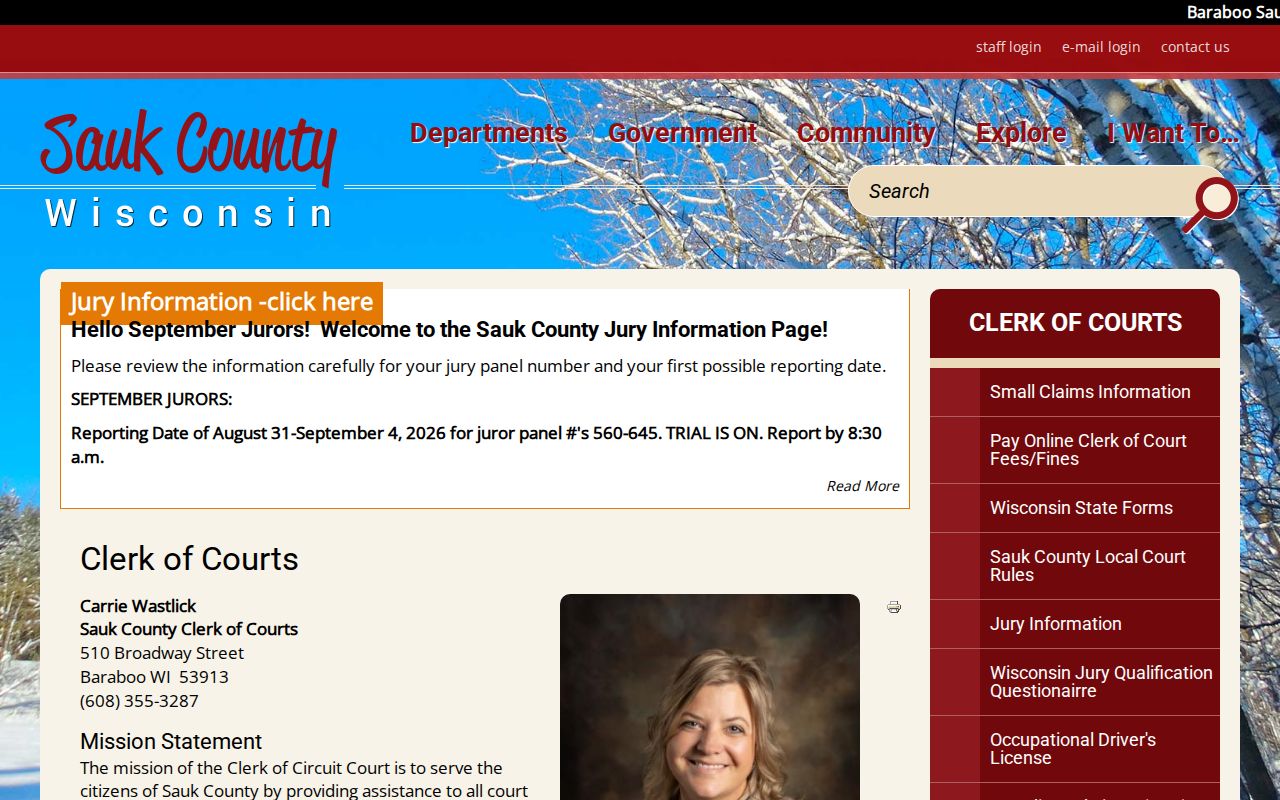
One office does most of the record work here. The Clerk of Courts receives Circuit Court filings. The office keeps the proceedings and court records, collects court financial obligations, runs jury operations, and helps the public with filing and copies. Carrie A. Wastlick serves as Clerk of Courts. There are no separate criminal and civil clerk counters. This is the single doorway for Circuit Court business in Sauk County.
The official Clerk of Courts page posts the office's public contact and service details.
Clerk staff will walk you through the request procedure and the charges. They cannot give legal advice, take a side, unseal a record, or promise that every old file is online.
Sauk County Clerk of Courts
510 Broadway
Baraboo, WI 53913
Phone: (608) 355-3287
Weekdays: 8:00 a.m. to 4:30 p.m.
Court Record Types
A case summary is the overview you search. Court activities list hearings and other scheduled acts. Court record entries build the dated docket history, and behind those entries sits the document file. That file can hold complaints, pleadings, motions, orders, judgments, exhibits, and transcripts. A Filed documents list may name an item without opening its image.
- Inspection means viewing the public file under office procedure.
- An ordinary copy is a readable reference copy.
- A certified copy bears Clerk certification.
- An electronic copy is offered only when the office and record permit.
- A redacted copy removes protected material from the public version.
Wisconsin Circuit Court eFiling serves registered filers and parties. Don't create a filer account just to read a record. Official eFiling guidance sends the public to the Clerk.
Sauk County Electronic File Boundary
The Wisconsin eFiling FAQ separates party access from public access.
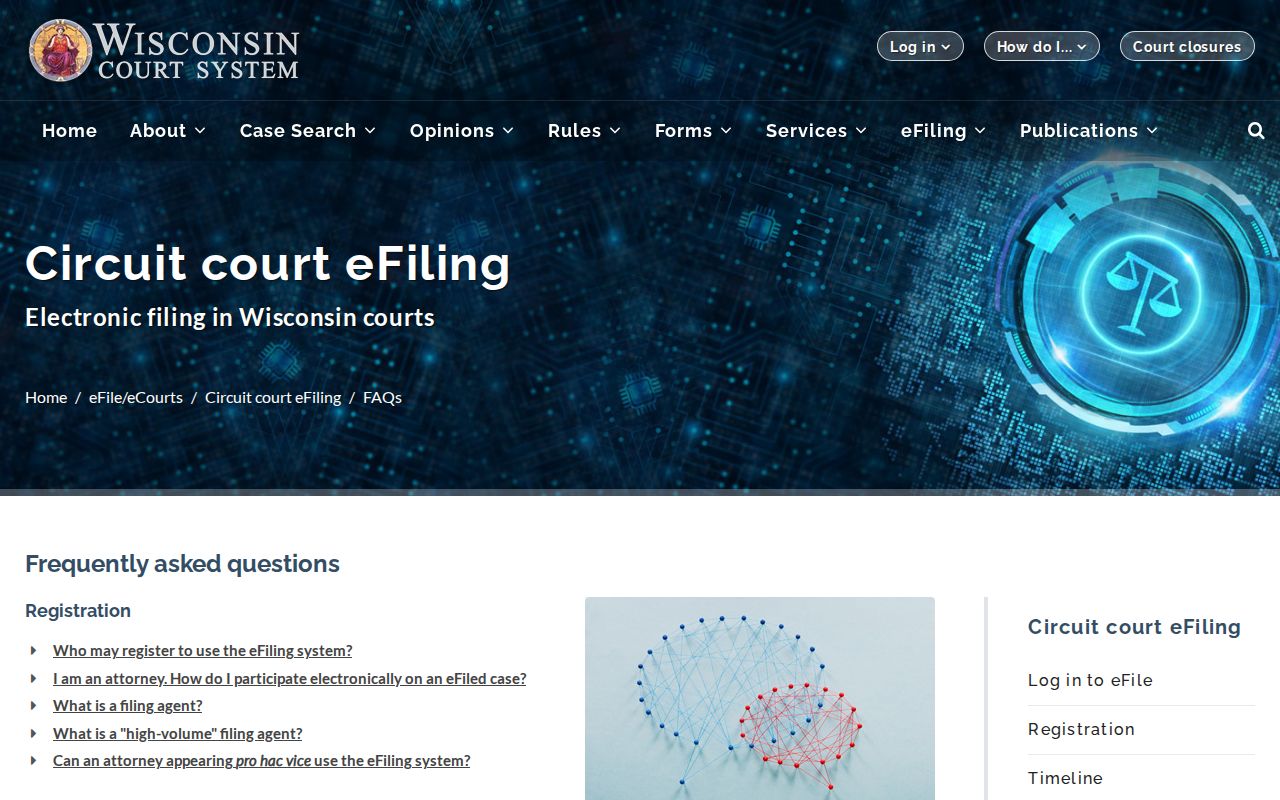
WCCA is an index and activity summary, not an open archive of document images. Public portions of electronic Circuit Court records come through the Clerk instead. Paper, microfilm, old, sealed, and specially handled materials may follow a different process.
Inside a Sauk County Court Record
The online view and the source file overlap but differ. Read each field for its narrow job. A caption identifies the matter. It never tells you who prevailed, and a status only reports the state of the case. Even a closed case can hold restricted documents or see later activity. Read event wording in sequence for that reason.
| Case number | The county identifier, commonly year, type code, and sequence. |
|---|---|
| Parties and attorneys | Associations displayed for the case. |
| Court activities | Date, time, place, description, type, and official. |
| Court record | Dated docket events, with added text when supplied. |
| Filed documents | Names and dates, not guaranteed public images. |
| Judgment or balance | Financial or disposition data that should be confirmed with the Clerk. |
A motion asks the court for a ruling; an order is the judicial direction that follows. In the same way, a complaint begins a claim while a judgment records the formal result. The words are not interchangeable.
Why Sauk County Files Go Missing
Several things can hide an item online. It may be sealed or confidential. It may contain a protected identifier, or sit in a juvenile or other protected proceeding. The item could predate electronic backloading, remain on paper or microfilm, or need a special transcript or exhibit request. WCCA sometimes lists a document but posts no public image.
Ask the Clerk whether the public portion can be inspected or copied. The answer might be a redacted copy, a separate process, or a lawful denial. An item missing from WCCA does not prove the event or file never existed.
Fees and Certified Copies
No stable local per-page or certification amount can be quoted here; only the statewide court fee chart governs charges. Don't read a price into a payment screen. Tell the Clerk the format, page range, delivery method, and certification need, then get the current total before paying.
| Request | What to confirm | Amount |
|---|---|---|
| Inspection | Office procedure and appointment need | Ask Clerk |
| Ordinary copy | Page count, format, and delivery | Ask Clerk |
| Certified copy | Certification and copy components | Ask Clerk |
| Transcript or exhibit | Custodian and special process | Ask Clerk |
Paying online clears what you owe. It does not certify a Sauk County court record or take the place of a copy request.
Sauk County Retention Limits
Not every old record follows the same retention period. Wisconsin Supreme Court Rule Chapter 72 sets the state framework by record category. Material can survive in another medium even when it is not online. If the case number is unknown, give the Clerk the approximate year, case type, and party name.
The official records-retention rule is where that framework lives.
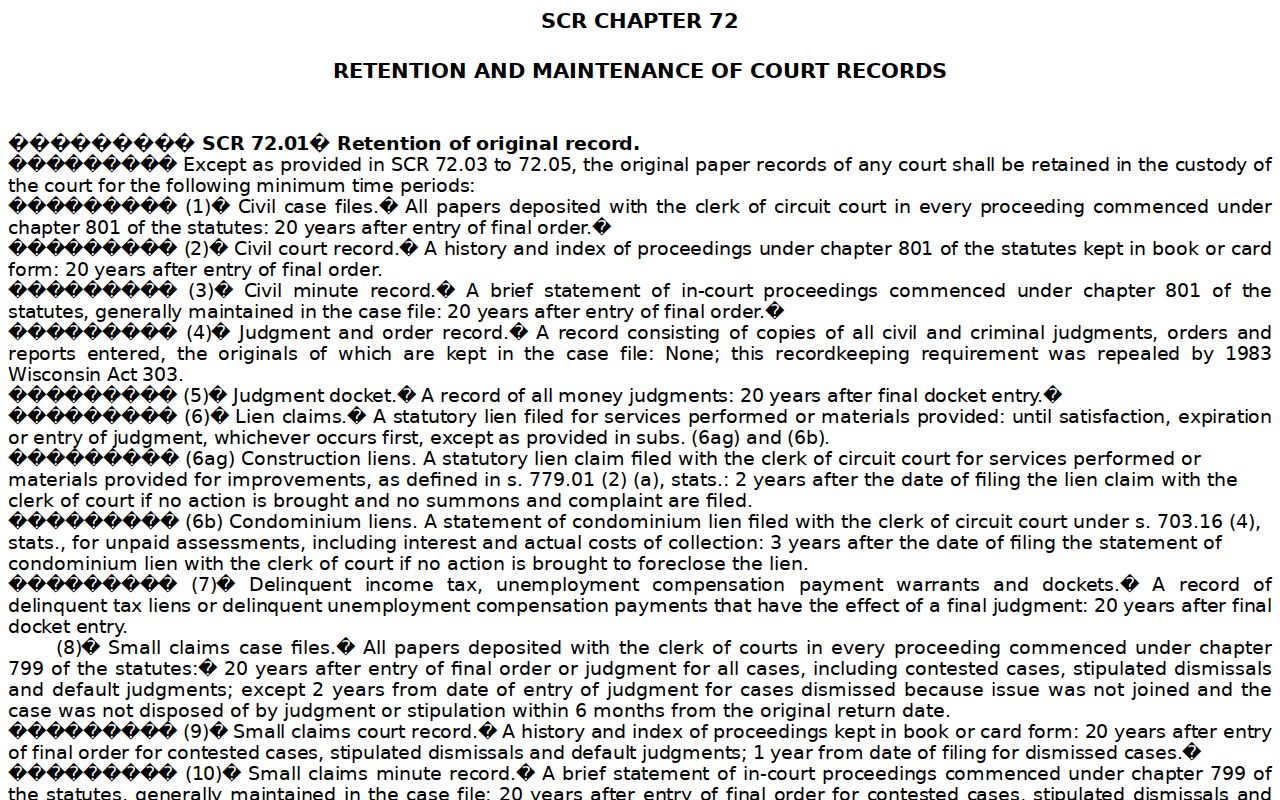
Retention and public access are separate questions; a record the court keeps can still hold sealed or protected parts.
Sealed Records and Public Access
Wisconsin Statutes §§ 19.31 and 19.35 state the public-record policy and the inspection and copying framework. Court records carry extra limits of their own. Sections 801.19, 801.20, and 801.21 cover protected filing information, confidential information, sealing, and redaction. Social Security, tax, account, license, state-ID, and passport numbers are among the protected categories.
Confirm the correct court and case number first. Then ask the Clerk for the public portion. Probate and juvenile matters may route through the Register in Probate and juvenile clerk. A court order and the governing law control what you get, not the fact that an index entry is visible.
Sauk County Document Request Details
Details make a Sauk County records request faster. Give the case number and case type. Add an approximate filing date, plus the exact document name if WCCA shows it. Say what you want. Inspection, a plain copy, a certified copy, and an electronic copy are four different requests. If you mail it, ask which address, payment form, and return steps the office requires, and share only the personal details needed to identify the public record.
Know which office holds the file. A judicial assistant handles branch scheduling, while the Clerk of Court is the contact for records and copies. Probate and juvenile matters sit with the Register in Probate and the juvenile clerk. Municipal clerks keep local ordinance files. Federal cases belong to the Western District. Naming the right court keeps a Sauk Circuit Court docket request from landing with an office that never held the record.
Treat the online entry as a locator, not the document itself. A Court activity line shows a hearing or other event that is scheduled or completed. A Court record entry marks a procedural act. The Filed documents block names material in the file. None of these short fields gives the full wording of a complaint, motion, order, judgment, transcript, or exhibit. Ask for the exact item. That way you avoid paying for a whole file when one public order is all you need.
Older Sauk County case files may live on paper, microfilm, or another kept medium, even when they never appear in WCCA. Supreme Court Rule Chapter 72 governs retention and disposition. Age alone does not prove an item exists or was destroyed. Give the Clerk an approximate year and case type. Ask staff to confirm the search procedure, availability, copy format, certification, cost, and delivery method before you travel or send payment.